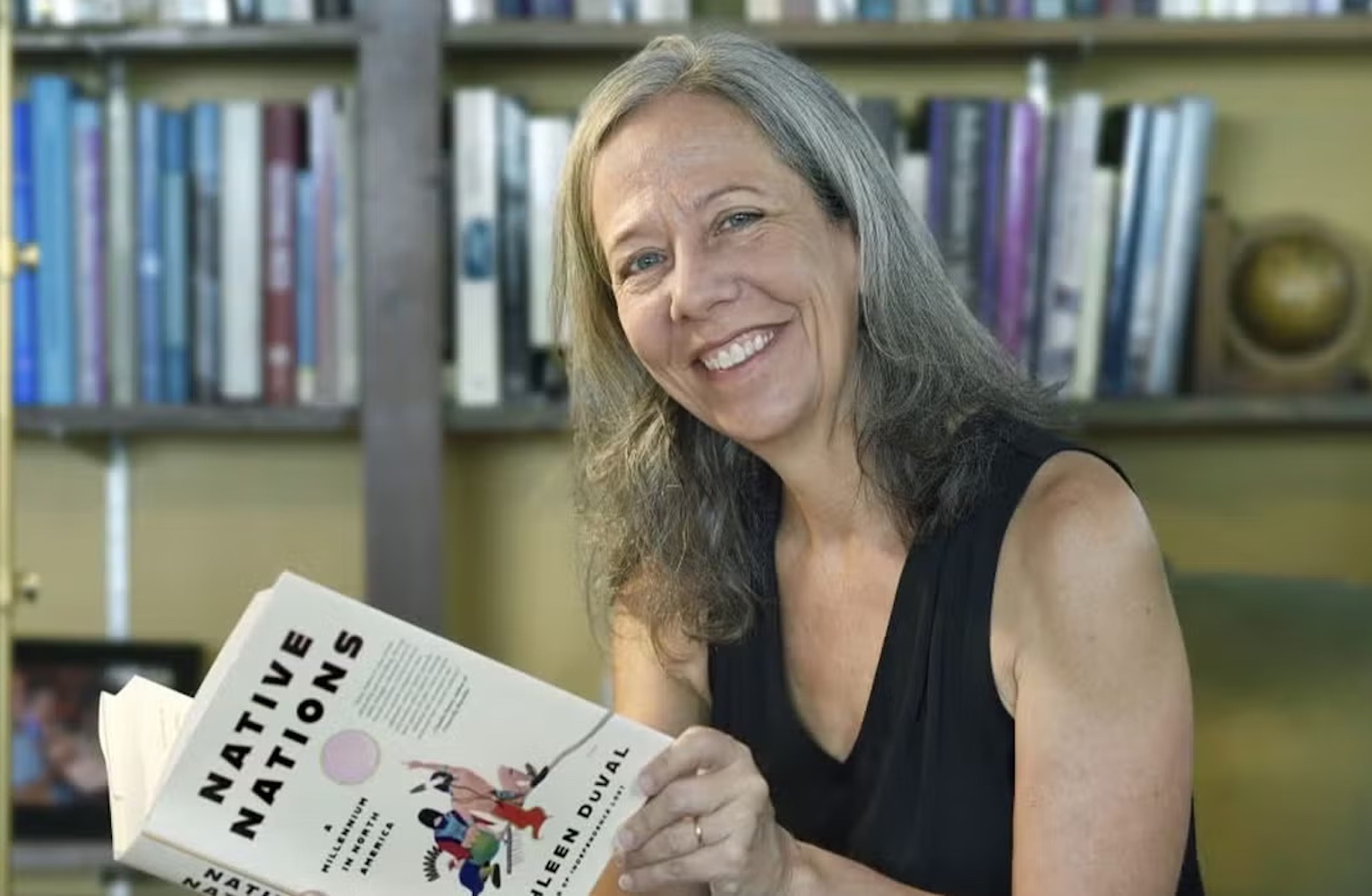
Historian and Pulitzer Prize winner Kathleen DuVal invites students to explore the histories of Native American communities. (Photo by Donn Young)
As a longtime scholar of early American history, Kathleen DuVal knows the past isn’t exactly static.
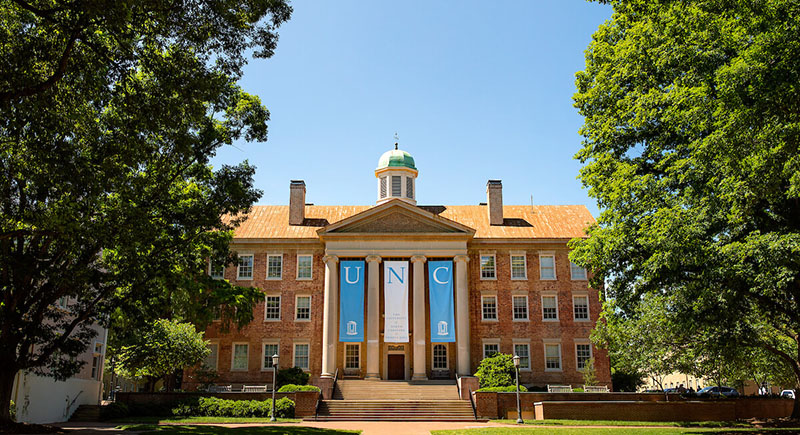
For DuVal – the Carl W. Ernst Distinguished Professor of History in the UNC College of Arts and Sciences – and the students she teaches, America’s early days are a living, breathing thing, with untold stories and perspectives to consider that can illuminate our past and shape our present.
Her latest book, “Native Nations: A Millennium in North America,” was recently awarded a 2025 Pulitzer Prize, recognized for its “panoramic portrait of Native American nations and communities over a thousand years, a vivid and accessible account of their endurance, ingenuity and achievement in the face of conflict and dispossession.”
The book previously received the prestigious Cundill History Prize, the Bancroft Prize and the Mark Lynton History Prize.
So much of common knowledge about Native Americans begins with the arrival of Europeans and the colonization of many Native tribes, DuVal said. Those stories often center the destruction, displacement and sadness Native Americans experienced.
But who were they before that flash point in history, and how did they survive colonization? This is the story DuVal wants to tell.
“What people often say to me when they learn what I teach and write about is, ‘Oh, it was so sad.’ And it was. But that takes Native peoples out of the story,” said DuVal, the Carl W. Ernst Distinguished Professor of History. “We seek to understand them as making their own choices in the world and having successes and failures — and should not assume that they were always taken over by someone else.”
DuVal wrote the book to extend to wider audiences the vibrant history she teaches in her undergraduate course Native North America, where she reaches further back in time and bridges that history to the present day, covering 1,000 years of Native life and culture. Before the arrival of Europeans, Native Americans built urban cities and governments, and later smaller societies, and had agency as the protagonists of their own lives.
By pairing archaeological facts about that millennium with oral histories from that time, she invites students to explore Native American history through the rise and fall of urbanized communities, the design of environmentally and economically sustainable ways of life and the movement of tribes across America.
“It’s been a puzzle — how did it happen?” she said. “And I think history tells us, yes, people were making these decisions for themselves.”
DuVal, who came to Carolina in 2003 and has taught the survey class on and off for two decades, said the evolution of her work has been inspired by the process of teaching, engaging with her students and taking in their new questions and curiosities.
Her teaching and her scholarship are “completely intertwined.”
“I love teaching and working with UNC students,” she said. “They are so giving and open, and just about every time I teach, I learn more about their ideas. And I chose the particular nations that I focus on, in large part, because of colleagues who are citizens of those tribes, so they could introduce me to sources to make sure I didn’t get things wrong.”
America is constantly changing, and students are more interested than ever in examining the country’s earliest centuries to make sense of how people lived then and now, particularly in her courses U.S. History to 1865 and The American Revolution. Where the 18th century once felt relevant simply for Americans’ beginnings, students can connect that to their lives now, DuVal said.
“American history and Native American history absolutely have everything to do with today and help not only explain how we got here, but also help us understand where we want to be.”
Distinguished professorships support renowned scholars and propel research at Carolina. These privately funded endowments help attract and retain the academic leaders of today, ensuring a state-of-the-art education for all Tar Heels.
Story originally published by Courtney Jones Mitchell, UNC College of Arts and Sciences.
Related Stories