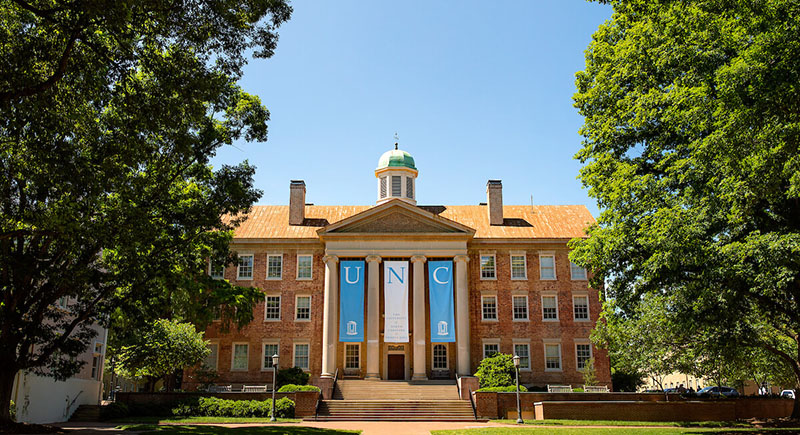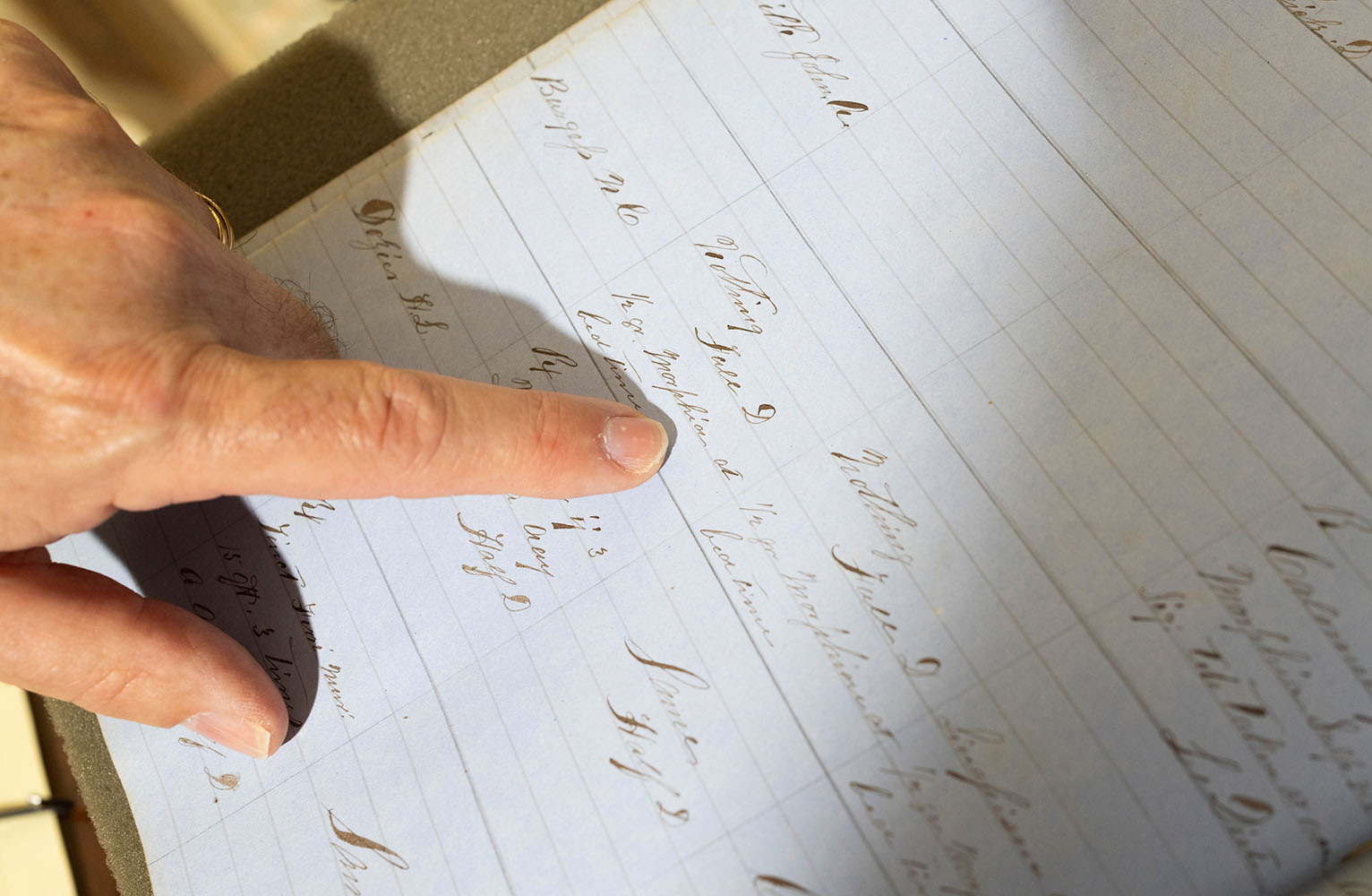
19th-century logbooks in UNC’s Wilson Special Collections Library informed a new book on America’s first opioid crisis. The above prescription and diet book (circa 1800s) shows a doctor’s record of treatment, medicine and diet prescribed for various patients, presumably from North Carolina.
A new book on America’s first opioid crisis grew out of a Wilson Library research fellowship that now has a secure future of its own. Thanks to a $500,000 challenge from the William R. Kenan Jr. Charitable Trust and the donors who met it, the fellowship program is fully endowed, ensuring continued support for scholars whose work begins in the archives.
Written by Angela Harwood
Photos by Jeyhoun Allebaugh
A new book about America’s first opioid crisis arose out of a fellowship program at Wilson Special Collections Library.
Published by UNC Press, Opium Slavery: Civil War Veterans and America’s First Opioid Crisis offers historical insight into the roots of today’s crisis. The author, Jonathan Jones, then a PhD candidate at Binghamton University, used a 2018 visiting research fellowship to uncover key firsthand sources that became the foundation for his dissertation — and ultimately this book.
Jones came across the Wilson Library Research Fellowship opportunity on H-Net, an interdisciplinary forum for scholars in the humanities and social sciences.
“I knew about the archive at Wilson Library, which is a huge deal for anyone working in the 1800s, but especially people interested in the U.S. South,” Jones recalled. “But my doctoral program didn’t have a lot of funding at the time. I was lucky to be able to get a fellowship.”
Going to the source
The fellowship covered Jones’ travel from New York and his stay in Chapel Hill. During the almost three weeks he spent in the archives, Jones was particularly drawn to a collection of “daybooks,” coffee-table-book-sized scrapbooks kept by nineteenth-century doctors. The daybooks contained doctors’ handwritten random thoughts, what they’d prescribed and other aspects of their daily lives that gave Jones insight into how Civil War-era doctors were prescribing opioids.
“It was a big moment for me to find that material,” he recalled.
Jones noted that historians often overlook daybooks: They’re tough to decipher, riddled with obscure abbreviations and proof that doctors’ illegible handwriting is nothing new.
“You have to do a little bit of code-breaking,” Jones said. “You really need a few days to sit down with each daybook and immerse yourself in the world of that particular doctor.”
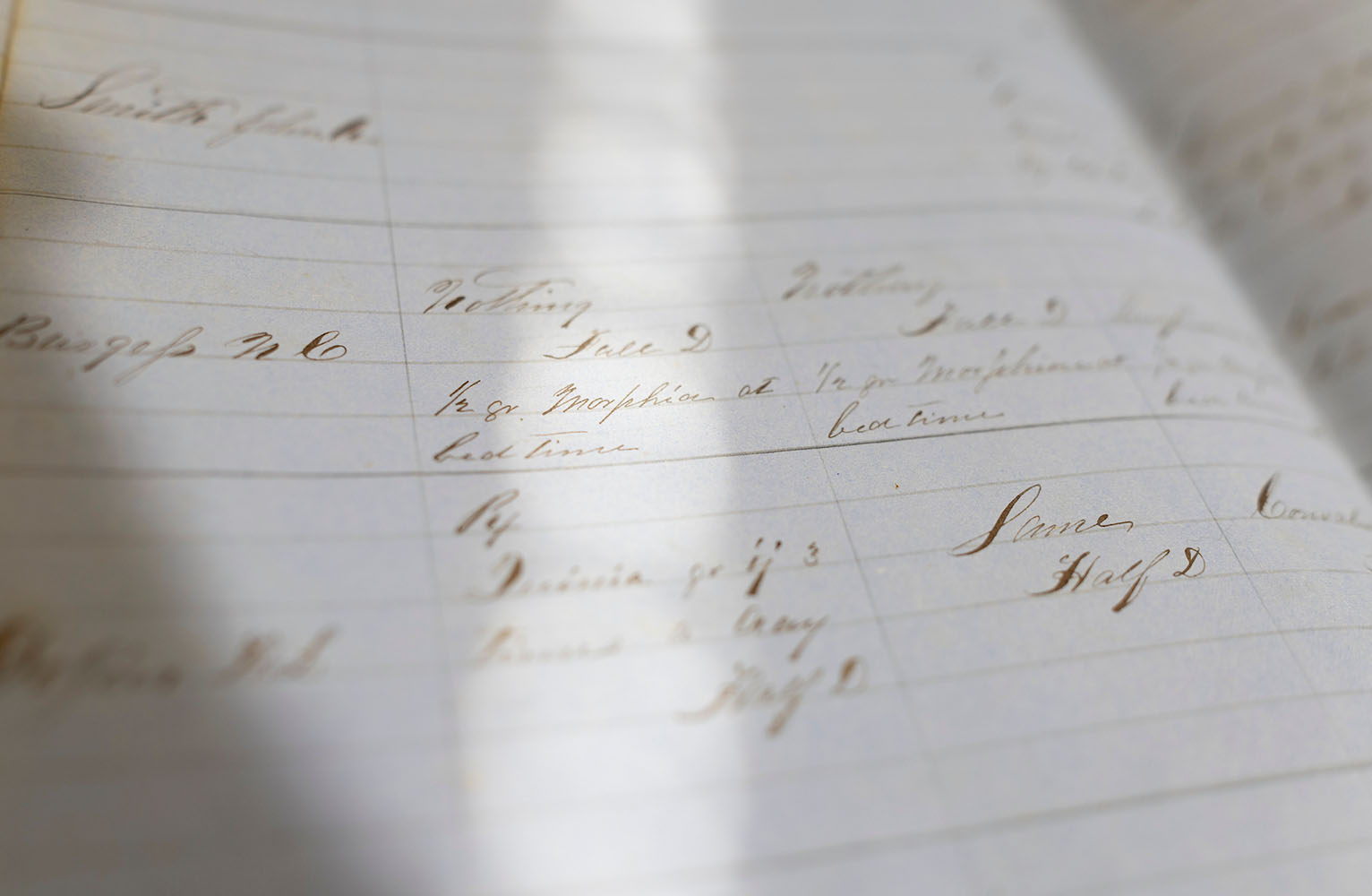
The Wilson Library Research Fellowship allotted Jones the time to decipher the materials that provided insight into how Civil War-era doctors were prescribing opioids. According to Jones’ book, the prescription and diet book of the Camp Stokes hospital shows that surgeons gave opiates to about 44% of the soldiers treated there in August 1864.
Jones was also interested in how opiates were used, prescribed and taken during the Civil War. Wilson Library archivists helped him find logbooks from several Confederate hospitals that had never been touched as far as he and the archivists were aware. Often hospital logbooks from that era are written in pencil, which fades over time, making the content illegible.
“The logbooks at Wilson were so well preserved that you could actually read them,” Jones explained. “It was the first time I was able to get a concrete sense of what was going on in Confederate hospitals as opposed to civilian hospitals.
“I couldn’t have written my dissertation and definitely not the book without the materials I was able to access at the special collections library, and the time to study them.”
Fellowship program secured for the future
Now, thanks to the William R. Kenan Jr. Charitable Trust and the 86 donors who stepped up to match their challenge gift, the Wilson Library Research Fellowship program is endowed, meaning future scholars will have the support they need to pursue their own projects. A prior grant from the Watson-Brown Foundation helped establish the fellowship program, which will now be able to continue and grow.
UNC-Chapel Hill alumni Sue Plambeck ’85 and Charles Plambeck ’83, ’86 (J.D.) are among the donors who contributed to the $500,000 matching gift from Kenan Charitable Trust. As the incoming chair of the Friends of the Library Board, Sue Plambeck is particularly eager to celebrate the successful completion of the match.
“Being a member of the board gave me the opportunity to hear from the many faculty, staff and scholars who work within the collection,” shared Sue Plambeck. “The fellows’ expertise is just incredible, and you see that when they present their work. They’re astonishing, and I’m so impressed.”
The University Library awards approximately 20 fellowships a year — from visiting researchers, like Jones, to graduate students and faculty at UNC-Chapel Hill and further abroad. Beyond the individual researcher support, the fellowship program activates the use of the special collections, bringing them to life through discovery, learning and new knowledge.
For the Plambecks, contributing to the challenge was a “slam dunk,” Sue shared. “It was clear and made so much sense to double your gift through the challenge.”
“The Kenan Charitable Trust is honored to support the Wilson Library Research Fellowship to ensure this highly valued opportunity for students and faculty is sustained,” said Nancy Cable, executive director of the William R. Kenan Jr. Charitable Trust.
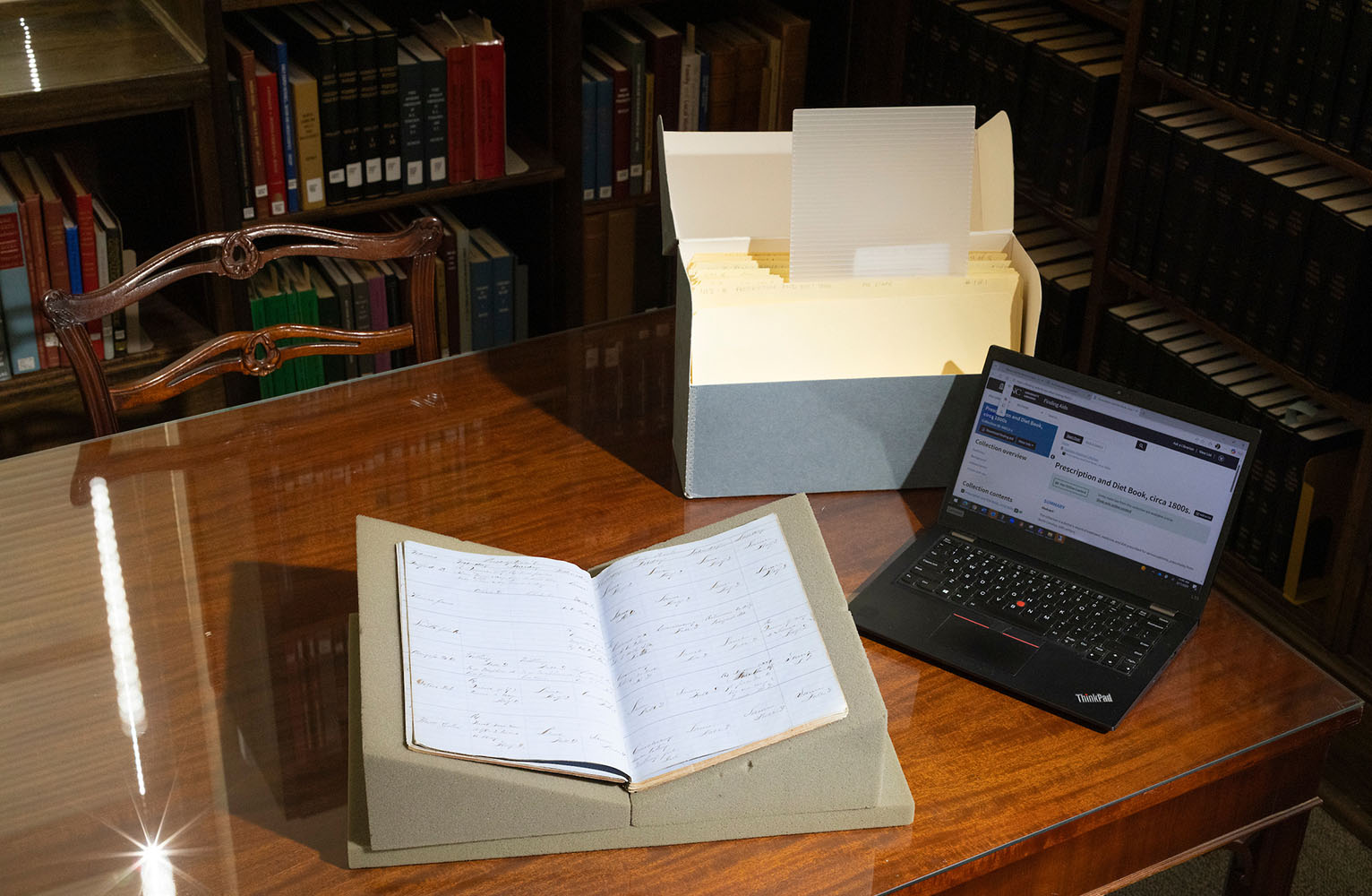
Unlike digital archives, which offer convenience and speed, physical collections invite a slower, more immersive encounter with history. Wilson Library Research Fellowships afford visiting scholars, faculty and students the time and resources to fully explore what the Wilson Special Collections Library has to offer.
A lasting impact on scholars and students
As Jones shared, his time as a Wilson Library Fellow was a “new, gold standard of research,” to have the time to go where the sources lead. Jones is now an assistant professor of history at James Madison University, where he shares this “gold standard” approach to historical research with the next generation.
“My fellowship definitely shaped the way I do my research and the way I try to train my students to do that research,” he said.
“The Wilson Library Research Fellowship is one of the many programs that makes UNC a global leader in innovative scholarship and research,” added Sue Plambeck. “The fellowships, people coming from all over the globe, interacting with people in North Carolina — any sort of collaborations among students, scholars and the historical collection is only going to make the University better than it already is.”
“We know so much about the past and our world today thanks to scholars who have visited Wilson Library, used the collections here, and benefited from the expertise of Carolina’s librarians and archivists,” said Vice Provost for University Libraries and University Librarian María R. Estorino. “The Kenan Charitable Trust and every donor who helped meet this challenge grant ensure that future researchers will be able to have that very same experience, driving insight and discovery and enriching our world for generations to come.”