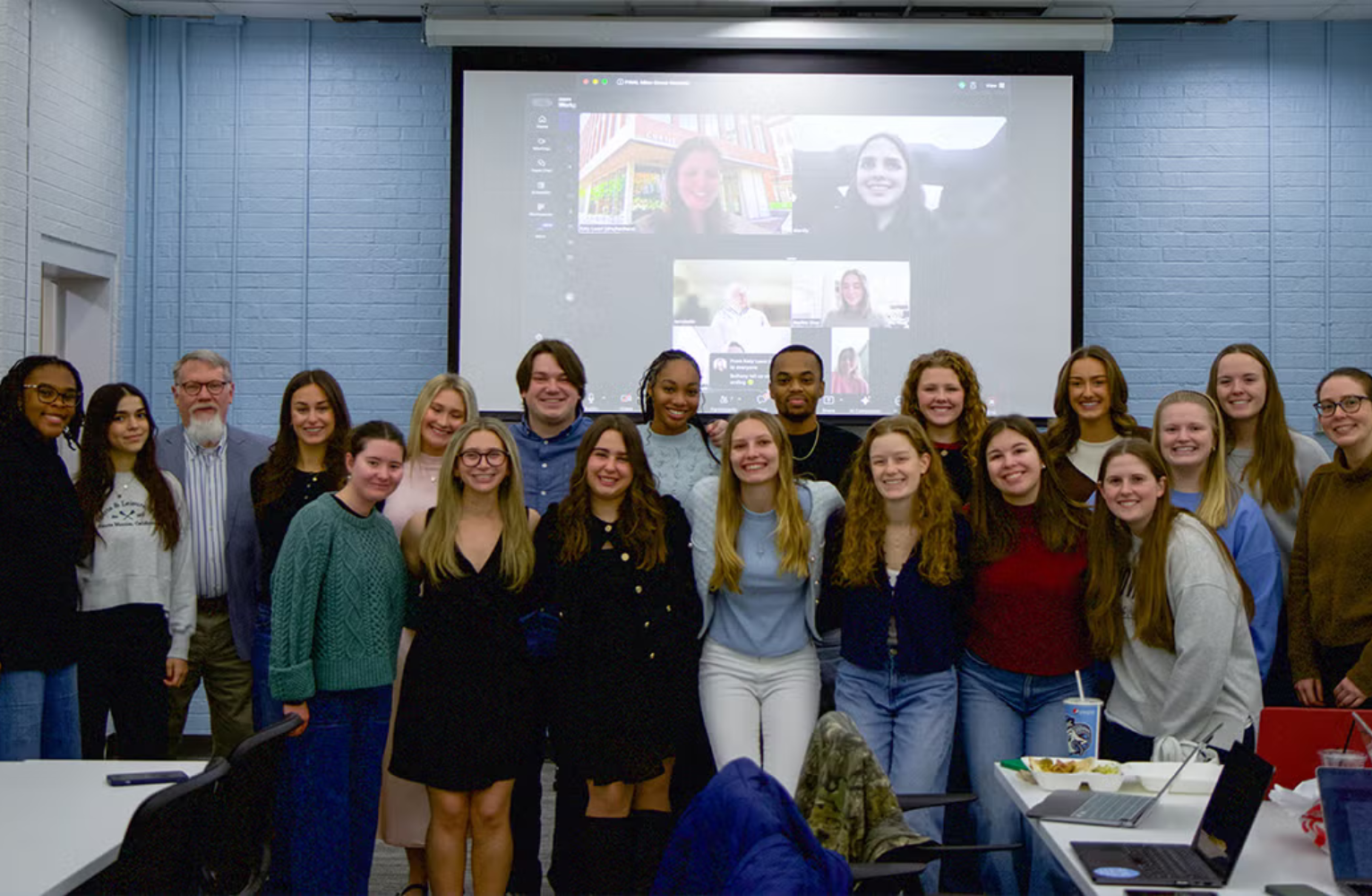
David Ardia, Reef C. Ivey II Excellence Fund Term Professor of Law in the UNC School of Law and co-director for the UNC Center for Media Law and Policy, on regulatory challenges in media law.
David Ardia was a lawyer at The Washington Post when the internet first came on the scene, and he began thinking deeply about how the internet would impact journalism.
This led him to a career in academia, studying how law and policy support the public sphere necessary for American democracy. His research focuses on government transparency, speech protections, business competition and antitrust within the media environment. He also serves as co-director of the UNC Center for Media Law and Policy; a collaboration between the UNC School of Law and the UNC Hussman School of Journalism and Media. The center leads research, offers career services and a dual degree program, and hosts a slate of events each year that seek to engage students, academics and industry in discussions about the First Amendment and other issues in media law.
The center hosts the annual Hargrove Colloquium, which provides a forum for discussions between academic and industry leaders. The 2026 colloquium will feature Kevin Martin, vice president and head of global policy at Meta and former chairman of the Federal Communications Commission. The event will explore how regulators and industry leaders can respond to rapid technological change while fostering innovation and maintaining competitiveness in an increasingly global media and communications marketplace.
How should we navigate the tension between allowing for technological innovation and protecting against technology’s potential harms?
ARDIA: How to balance innovation, while at the same time addressing the harms that might come from innovation, is an age-old challenge for all regulatory policy. In media law, this challenge has long been especially acute because technology evolves — and reshapes society — far faster than law can respond.
This was true even before the widespread adoption of generative AI. However, generative AI has really intensified the issue. Another complication is that the United States is no longer the sole developer and regulator of internet technologies. As technology companies have become multinational and other countries have caught up, questions of national competitiveness and national security increasingly shape how we think about regulation and innovation.
As co-director of the UNC Center for Media Law and Policy, the number one thing I want to instill in law and journalism students is how to think critically about these issues. This generation of students will make decisions that shape our world well into the future. During the Industrial Revolution, rapid technological change prompted regulatory choices that influenced society for generations. We are witnessing a similar moment today, and the next generation of professionals will play a comparable role in determining how technology is governed.
The regulation of new technologies is extraordinarily complex, and we have to be careful about regulating what we don’t understand. AI regulations require a nuanced approach because AI refers to many different things and regulations will likely need to strike a different balance for different types of AI.
As we explore these topics with our students, I try to encourage creativity and humility. We cannot simply rely on how we’ve done things in the past, and the solutions won’t come from the legal field alone. The regulation of technology is an interdisciplinary issue, and one of the great strengths of our center is that it facilitates discussions between our law and journalism students and their peers in computer science, communications, data science and other fields.
Professorships support renowned scholars and propel research at Carolina. These privately funded endowments help attract and retain the academic leaders of today, ensuring a state-of-the-art education for all Tar Heels.
As told to Audrey Smith
Related Stories