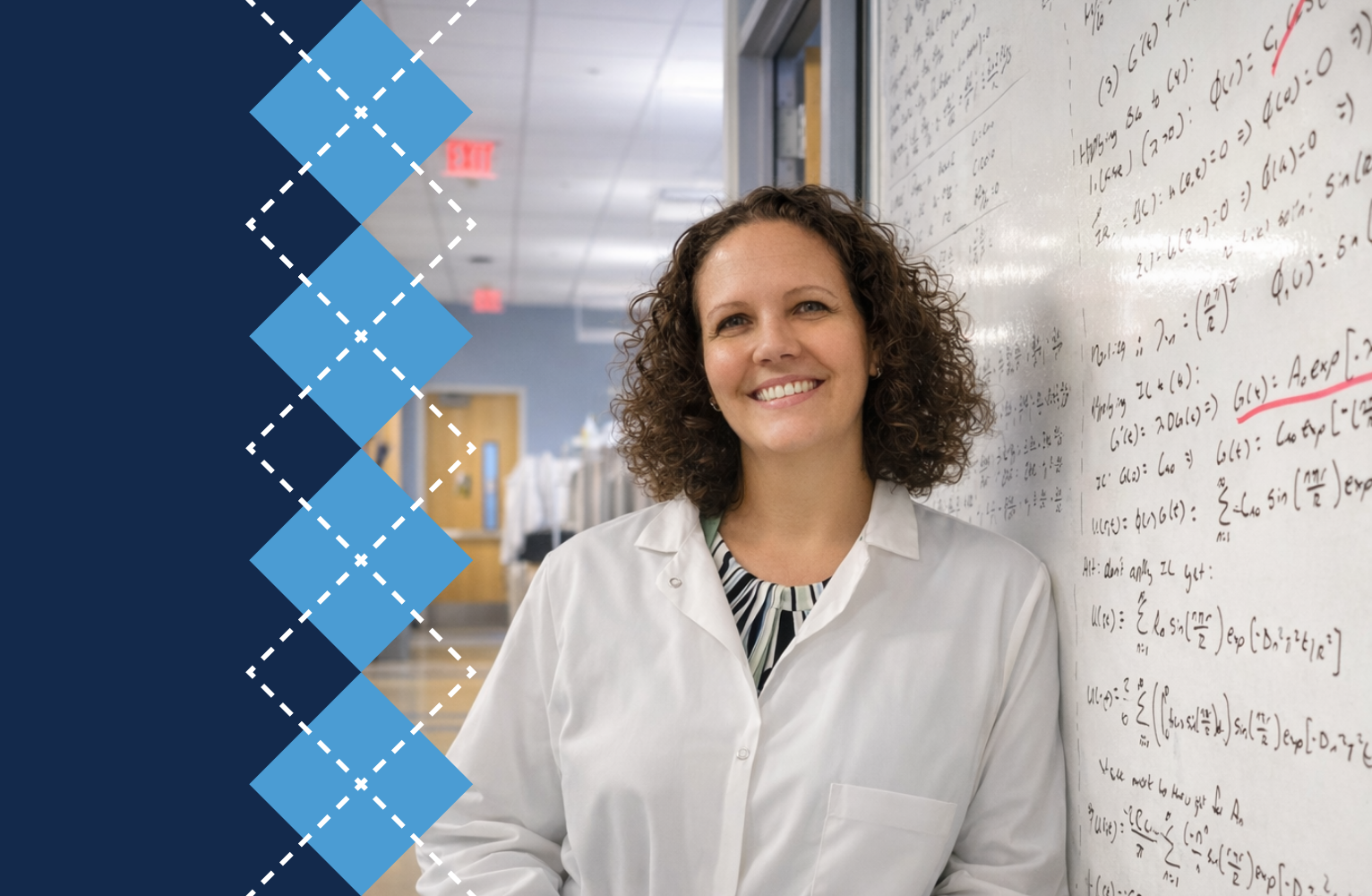
Kristy Ainslie, Eshelman Distinguished Professor in the UNC Eshelman School of Pharmacy, discusses her lab’s work on an inverse vaccine to treat autoimmune diseases.
Kristy Ainslie’s lab studies how polymers can be used to package signals to skew immune responses. She uses these technologies to create better infectious disease vaccines, new therapies to treat cancer or to specially deactivate the immune system to treat autoimmune responses.
For patients with autoimmune diseases, current treatments broadly suppress the immune system, to prevent it from attacking the patient’s own healthy tissues and organs. However, this leaves those with diseases like Type 1 diabetes, multiple sclerosis, lupus, rheumatoid arthritis and inflammatory bowel disease, vulnerable to infections. The COVID-19 pandemic highlighted this issue, leaving autoimmune disease patients uniquely at risk and often requiring them to mask, distance and isolate themselves more strictly in order to avoid infection.
Funded by the Eshelman Innovation Therapeutics Accelerator, Ainslie’s lab is working to develop inverse vaccines for multiple sclerosis. They aim to create inverse vaccines that are as targeted as antigen-specific vaccines, and can effectively treat autoimmune diseases without leaving patients immunocompromised.
How do inverse vaccines seek to improve autoimmune disease management?
AINSLIE: In autoimmune diseases, the attacking cells are primarily T cells and some B cells. If you imagine these cells as soldiers lined up for battle, then today’s standard autoimmune therapies are pulling back the entire army. What we’re trying to create would be like sending in an army general who can give specific orders about where attacks should happen and where the army needs to be pulled back to keep it from attacking healthy cells.
So with multiple sclerosis, for example, these T and B cells attack the myelin, which serves as a protective coating around a person’s nerves. We’re using polymers to train more regulatory cells that tell autoimmune T and B cells not to attack. This leaves the rest of the T and B cells able to fight off influenza, COVID and other viruses and pathogens in the environment.
Turning down an existing immune response in a specific fashion is quite hard, though. Current therapies are broadly applicable treatments that can be given across multiple diseases like rheumatoid arthritis, multiple sclerosis, lupus or many other autoimmune diseases, but an inverse vaccine is far more complex and disease-specific.
Inverse vaccines can’t be universal to all autoimmune diseases because each individual disease operates differently. And even in treating the same disease, there will be variation in how the treatment needs to be delivered to each person. In the same way that organ donations have to be carefully matched to make sure they aren’t rejected by the immune system, a multiple sclerosis inverse vaccine will have to be tuned specific to each individual, to ensure similarity of peptides and proteins so that it isn’t attacked by the patient’s body.
But it’s worth it to do this complex work, because inverse vaccines that offer more apt disease treatment and a greater ability to fight off the germs circulating in a person’s environment would greatly improve quality of life for those living with autoimmune diseases.
Distinguished professorships support renowned scholars and propel research at Carolina. These privately funded endowments help attract and retain the academic leaders of today, ensuring a state-of-the-art education for all Tar Heels.
As told to Audrey Smith
Photo submitted by subject
Related Stories