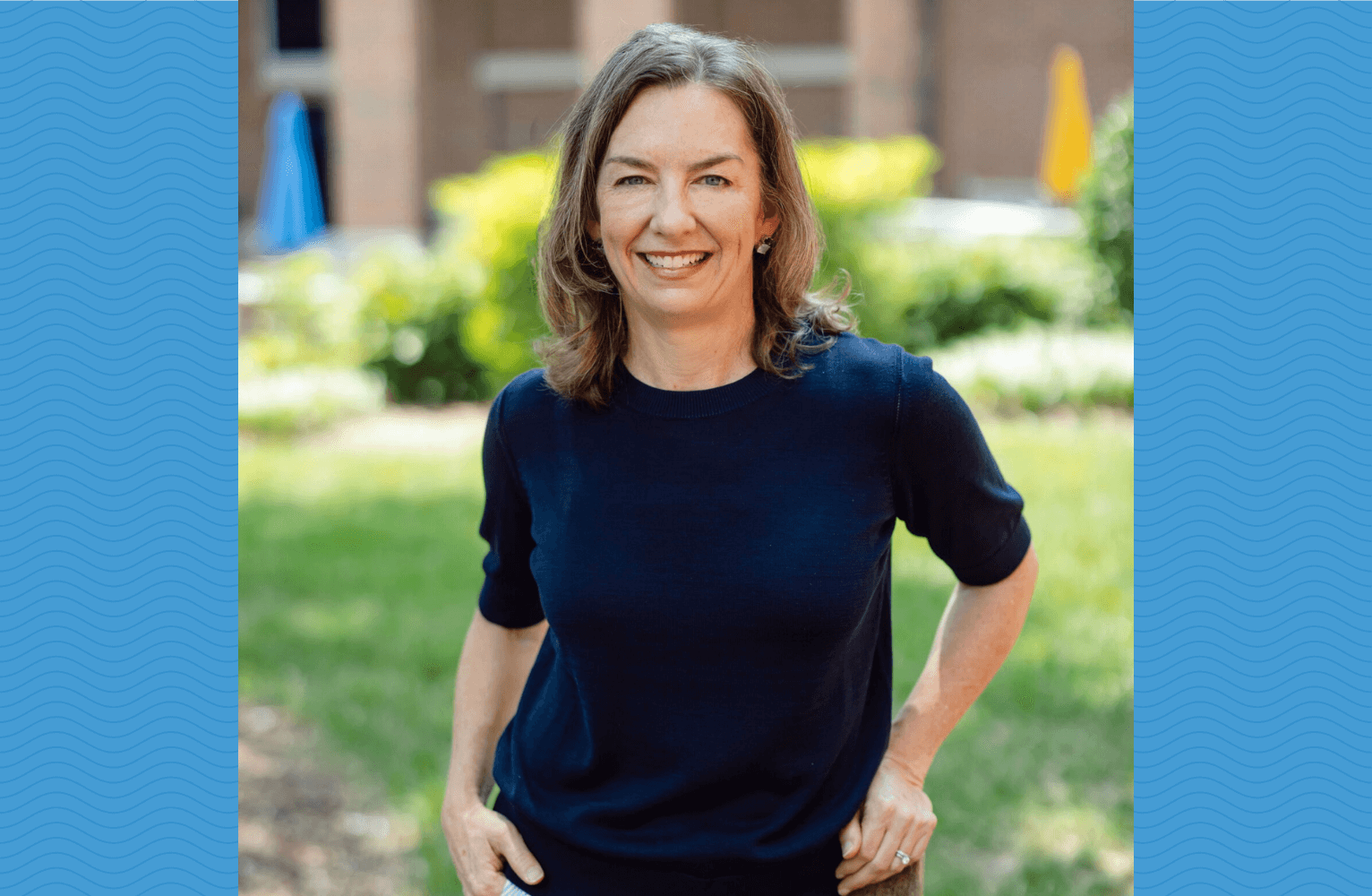
Marisa Marraccini, Donald & Justeen Tarbet Distinguished Scholar and associate professor in the UNC School of Education, on youth suicide prevention
Marisa Marraccini trained as a school psychologist, in both rural and urban school settings, while getting her PhD. She became very involved in school suicide prevention practices and noticed that there weren’t evidence-based interventions to guide many of the schools’ most pressing issues.
Marraccini is now a researcher focused on developing and testing interventions for preventing youth suicide. She takes special care to partner with teens who have lived experiences with suicidal thoughts or suicide attempts, to make sure that researchers are developing approaches that will be effective and relevant to what adolescents and teenagers actually need.
What are the most important steps that parents and educators can take to improve the well-being of students?
MARRACCINI: At home and school, it’s important that adults are caring for kids, building and sustaining a safe environment for them, and appreciating and acknowledging the ways they want to be recognized.
For parents, this looks like walking the line between setting boundaries that keep your kids safe while also recognizing who your kids are becoming and allowing them to explore their identity. As kids transition from children to pre-adolescents and adolescents, and then to young adults, they naturally shift from primarily confiding in and relying on their parents to confiding in and relying on their peers. So, finding that balance between respect of this autonomy, while instilling boundaries to prevent risk is even more important. Parents also need to be prepared for the possibility of their child engaging in some risk-taking behaviors and having mental health-related crises, and ensure that they don’t withdraw from their kids when these things happen. It’s an incredibly difficult time to be a kid, and that means it’s an incredibly difficult time to be a parent. So parents also need to take time to care for themselves and their own mental health. They’re going to make some mistakes and that’s OK, but it’s important to model how to learn and grow from these mistakes, and own and apologize for these mistakes, and also model self-compassion with ourselves.
At the most basic level, educators can support student well-being simply by doing their jobs well. Being a high-quality, welcoming teacher or staff member who creates a safe space and provides opportunities for kids to connect can have a big impact. There is growing research suggesting that kids who feel connected to their schools and the people in their schools are less likely to have suicidal thoughts – and while this relationship is not causal, this research really reinforces the importance of connecting with students.
If schools don’t have one yet, adopting an evidence-based suicide prevention program is another incredibly important step. Most comprehensive programs have a gatekeeping program that trains people to recognize the signs and symptoms of suicide-related risk and then connect the at-risk student to the right person or place for intervention. Today’s teens are reporting thoughts of suicide and difficulties with internalizing symptoms (like depression and anxiety) at high rates, so the reality is that schools need to be prepared to support students who are struggling and be prepared for student suicide attempts. They also have to be ready to provide risk assessments and make referrals. And if a student suicide does happen, the school needs to be prepared to prevent contagion effects and provide care for the students, staff, families, and community who are processing the tragedy.
My research continues to reinforce how important it is to meet kids where they are, and that there isn’t one intervention that works for all kids. But I’m thankful that mental health is being talked about more than ever, and that so many people are working to de-stigmatize mental health struggles. In particular, I’m very moved by the way kids are speaking out about their mental health needs. This makes me feel really hopeful for the future.
Distinguished scholarships for faculty support renowned scholars and propel research at Carolina. These privately funded endowments help attract and retain the academic leaders of today, ensuring a state-of-the-art education for all Tar Heels.
As told to Audrey Smith ’10
Photo submitted by subject; illustrated background by Caroline Norton ’20
Related Stories