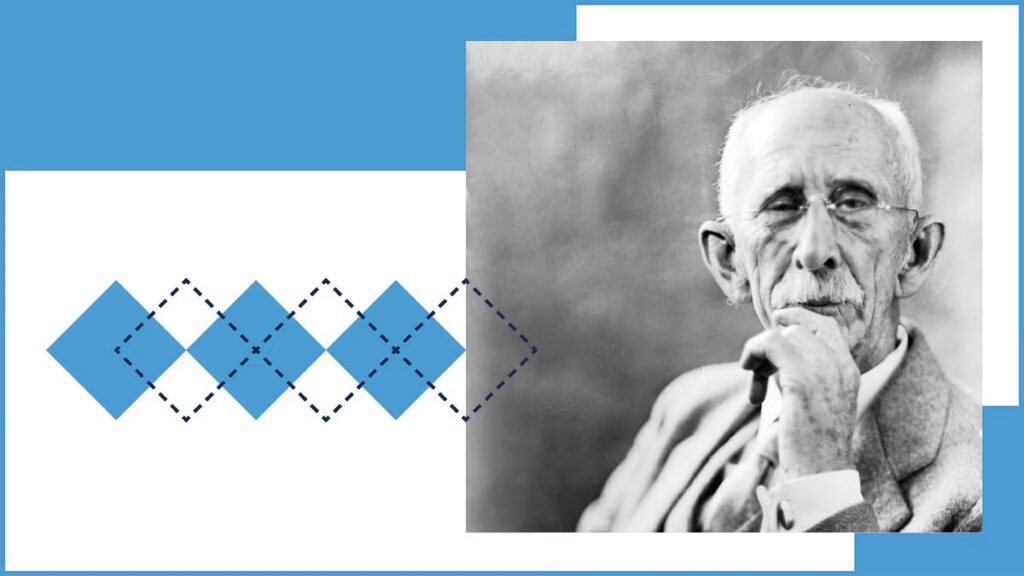
 Horace Williams, who spent 50 years teaching in Carolina’s classrooms, directed all of his property and land to the University in his will. (Submitted photo)
Horace Williams’ 1940 posthumous gift, which donated the Carolina North property to the University, has benefited hundreds of Carolina philosophy students.
Many UNC-Chapel Hill alumni and residents of Chapel Hill and Carrboro know the Carolina North Forest area is part of the University, but few know the history of the man who donated most of that property to the University: professor of philosophy Horace Williams.
Born in 1858, Henry Horace Williams grew up near the Great Dismal Swamp as the oldest of eight children and spent his childhood working hard on the family farm, which the Civil War had devastated. At 19, he began attending the Boys’ School in Murfreesboro, North Carolina. He then took a job at a store in the nearby village of Belvidere and saved enough money to enroll at Carolina.
In Chapel Hill, Williams lived a spartan life, excelled in academics and was elected senior class president. After graduating in 1883 with a bachelor’s degree and Carolina’s first academic master’s degree, he studied at Yale and Harvard. Williams reportedly planned to move to the West Coast, but University leaders persuaded him to join the faculty in 1891. That same year, he married Bertha Colton, an art teacher from Middletown, Connecticut, whom he met while preaching as a Yale divinity student.
Williams spent 50 years teaching in Carolina’s classrooms. Using the Socratic method and a direct approach, Williams showed his students how to ask difficult questions in search of truth and scholarship. He was a legendary figure on campus and was beloved by many of his students.
Influenced by impoverished childhoods, the Williamses were thrifty and religiously saved money. In 1897, they bought a house in Chapel Hill, part of what would become a vast real estate portfolio including rental properties and acreage all around town. Much of the land lay north of downtown Chapel Hill, known today as Carolina North and Carolina North Forest.
In 1934, Williams drafted a single-page will directing all his property and land — totaling nearly 1,000 acres — be given to the University. The will also expressed Williams’ intent to fund fellowships in the philosophy department named in memory of his mother Mary Taylor Williams and his beloved wife. Williams died in 1940 at age 82.
Turning wishes into fellowships
While the University generated some revenue from the land, including through timber harvesting that later supported the department, the will provided little guidance on using the land and assets to fund philosophy fellowships.
In the 1990s, the philosophy department engaged University leadership to create a more permanent financial solution to funding the fellowships.
Ultimately, a memorandum of agreement was signed in 1999 to create endowments that would yield annual funding for the fellowships. Over the next several years, the University contributed $6.3 million for this purpose.
The funds support about 15 doctoral students in any given semester. The funding ensures doctoral students have nonteaching time over the course of their program dedicated to scholarly work and travel funds for presenting scholarly work at conferences.
“Horace Williams was deeply dedicated to his students and to graduate education at Carolina, and his gift has supported generations of philosophy graduate students to achieve their fullest intellectual potential,” said philosophy department chair Matthew Kotzen.
What’s next?
While the MOA helped bring greater financial clarity and a more reliable funding stream, additional legal process may be necessary. To ensure all the paperwork is in order as the Carolina North project advances, the University will seek approval in the coming months for a plan that confirms the University’s commitment to supporting graduate study in line with Horace Williams’ wishes.
“While there’s no question that funding is going towards graduate study in philosophy, we want to ensure that all our paperwork is in order and that we’re both honoring the 1999 agreement and carrying out the donor’s intent,” said Paul Newton, vice chancellor and general counsel.
Williams gave Tar Heels 50 years of teaching and mentorship, but his thoughtful gift and wishes have been benefiting students for generations and soon will continue enhancing the University’s ability to serve the state through the Carolina North campus. As the University prepares to build Carolina North as a center for innovation, AI, research and economic development, the land serves as a reminder that Carolina’s future has long been shaped by investments in people and ideas as much as in physical spaces.
Story originally published by University Communications and Marketing
Related Stories