“It’s a proud and profound obligation that I had this incredible medical training at Carolina. I wouldn’t be where I am without that fundamental experience. When I look at how Carolina’s given me the stepping stones to be successful, I want to give back and let other people have that same success and feel empowered by the Carolina education.”
– David Fitzhugh
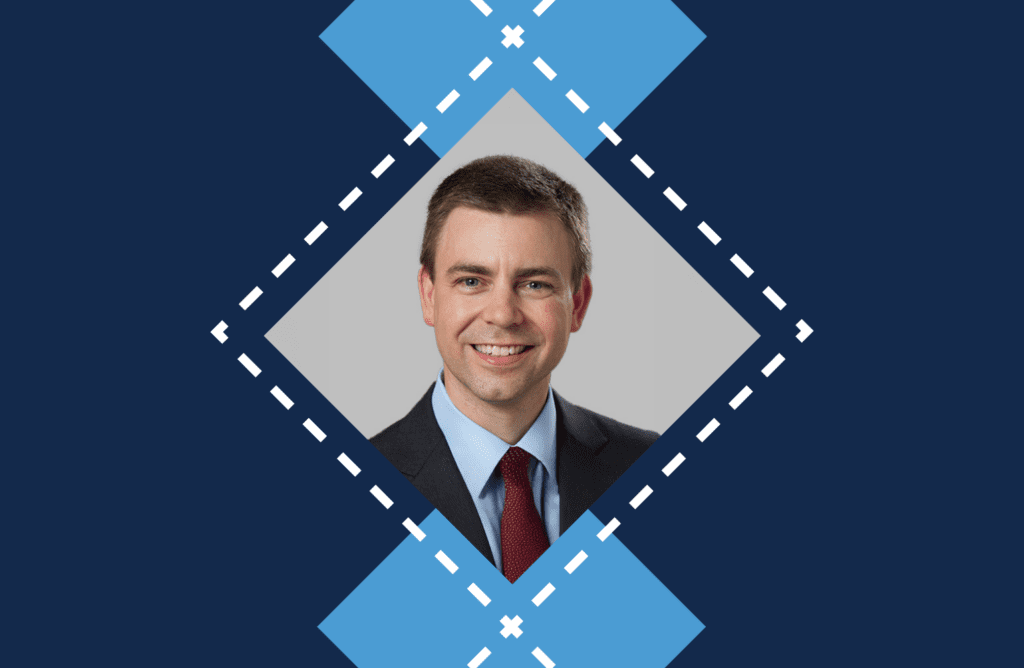
Dr. David Fitzhugh has spent nearly two decades building both a medical practice and a lasting connection to Carolina. After founding Allergy Partners of Chapel Hill in 2012, he deepened his ties to the University — treating students, collaborating with researchers and giving back philanthropically every year for more than a decade.
Dr. David Fitzhugh has called North Carolina home for nearly 20 years. He moved from Virginia for his medical residency at Carolina in 2004, and ultimately decided to plant roots in Chapel Hill. In 2012, he started his practice, Allergy Partners of Chapel Hill, from the ground up.
Over the years, Fitzhugh has come to understand Carolina is his community. His practice sits just three miles from UNC-Chapel Hill’s campus, and many of his patients are Tar Heel students. Carolina is engrained in just about every part of his life, which is why he has supported the University by giving every year for more than a decade and he is why he is recognized as a Bell Ringer.
His motivation to give comes from being a part of the community and wanting to give back, even if in small ways.
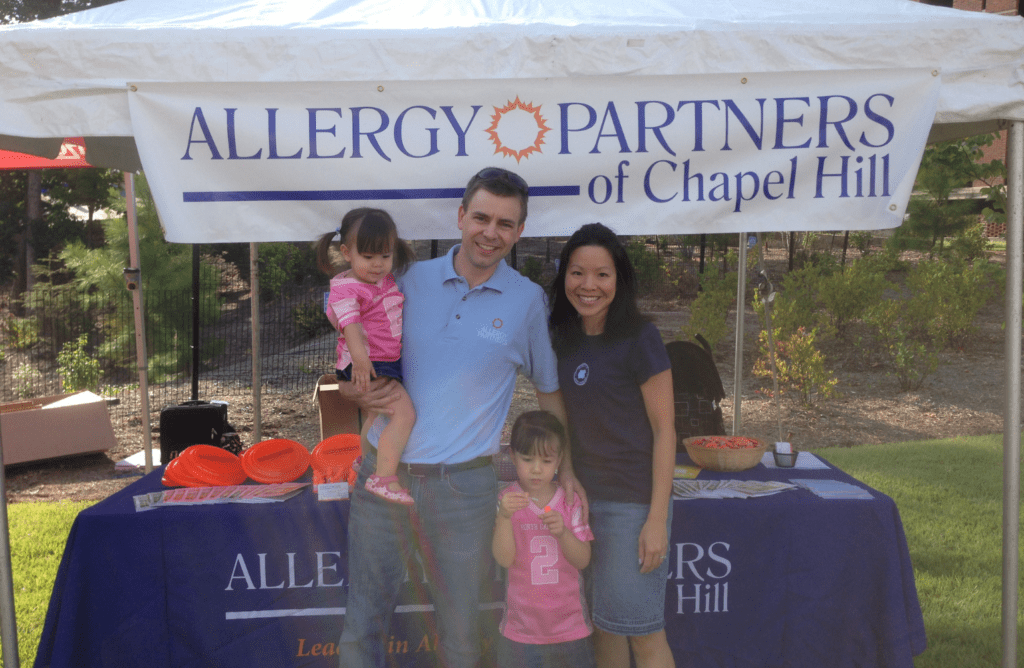
Dave Fitzhugh and his family tabling an event in Chapel Hill. (submitted photo)
“Understanding that small and regular contributions can really advance Carolina’s mission is important,” Fitzhugh said. “When I think about Carolina, I think about education and scholarships, but also service to the community.”
Fitzhugh hopes others in the Carolina community feel encouraged to give, knowing every gift, regardless of size, makes an impact.
“I think people can get hung up on the idea that, ‘My $500 a year won’t make a difference.’ It makes a big difference,” Fitzhugh said. “Carolina’s an amazing school, but there are plenty of students that will look at what they might owe each year and see that number as a barrier. Helping remove those barriers through giving is the right thing to do.”
Giving more than gifts
Fitzhugh’s connection to Carolina extends beyond philanthropy. In addition to giving annually, he collaborates with UNC researchers to help advance allergy treatment.
At Allergy Partners of Chapel Hill, Fitzhugh treats a wide range of allergy and immunology patients. Some visit for seasonal allergy care or hay fever that can be treated with allergy shots or immunotherapy. Sometimes, there will be more complex immunodeficient patients or patients with unexplained anaphylaxis.
His specialty is treating children with severe food allergies — such as peanut, tree nuts or sesame allergies — who’ve had serious life-threatening reactions. Fitzhugh and his team are pioneering a number of ways to desensitize patients so they either experience no reaction or a less severe reaction.
He discovered his work closely aligned with research already underway in UNC’s allergy division. That discovery led to a partnership with Carolina, sharing information and working together to improve treatments.
“It’s another reason that I give to UNC, “ Fitzhugh said. “Not only did Carolina help my medical training, it’s helping foster collaboration and cross-pollination that’s advancing what we are doing in the food allergy space today.”
One area of focus is sublingual immunotherapy, an alternative to oral immunotherapy that is considered lower risk and particularly useful for patients with severe reactions.
The treatment involves placing small amounts of an allergen under the tongue daily, gradually building immunity over time.
“The reason it’s safe is because you’re using a very low dosing scheme,” Fitzhugh said. “There are not many practices offering this, and UNC pioneered this technique. We’ve done a lot of collaboration with them to help develop our protocols and make sure we’re doing this in a validated and scientific way.”
A few years ago, Dr. Edwin Kim, division chief of pediatric allergy and immunology and the director of the UNC Food Allergy Initiative who developed this treatment in a research setting, asked Fitzhugh to expand this therapy at his practice to see how it would be operationalized in a clinical practice.
“Because we have such a high volume of patients doing that specific kind of therapy, Kim’s group is interested in looking at outcomes and data with what we’ve done,” Fitzhugh said. “It’s another good example of how UNC ties back to where I’m at these days.”
Looking ahead, Fitzhugh hopes to continue growing his clinical practice and contributions to the food allergy program at UNC. For now, he’s grateful he’s able to make a Carolina education more accessible.
“As the practice has grown, I’ve been fortunate to find success in the community,” Fitzhugh said. “That makes me want to give back so students who might not yet see the 10- or 20-year path ahead of them don’t have to worry about debt and can graduate with a rich education.”
Written by Terzah Dyer
Related Stories